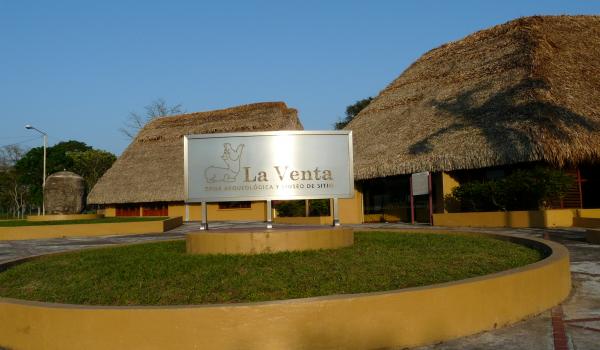












La Venta
Archeological site
La Venta
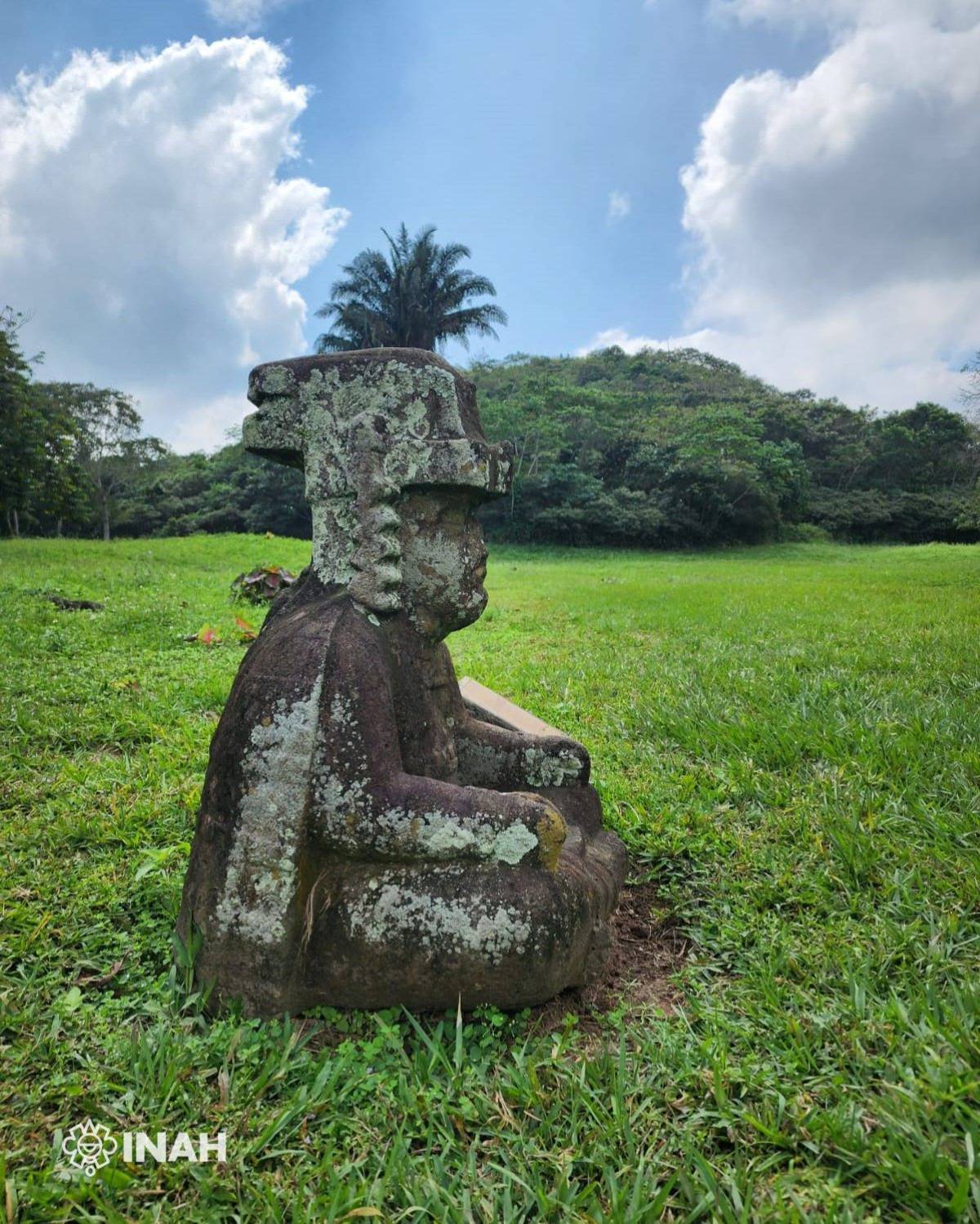
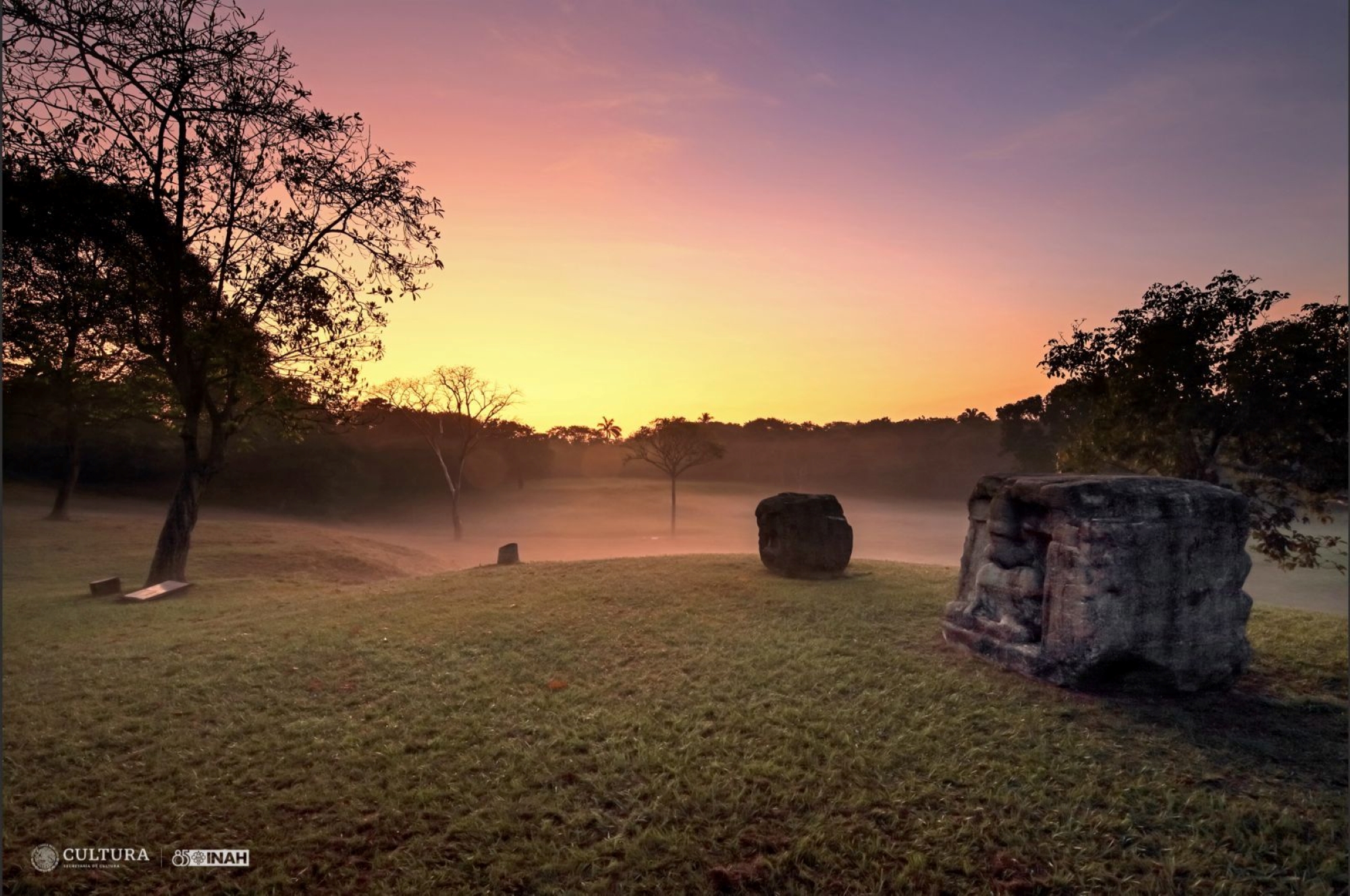
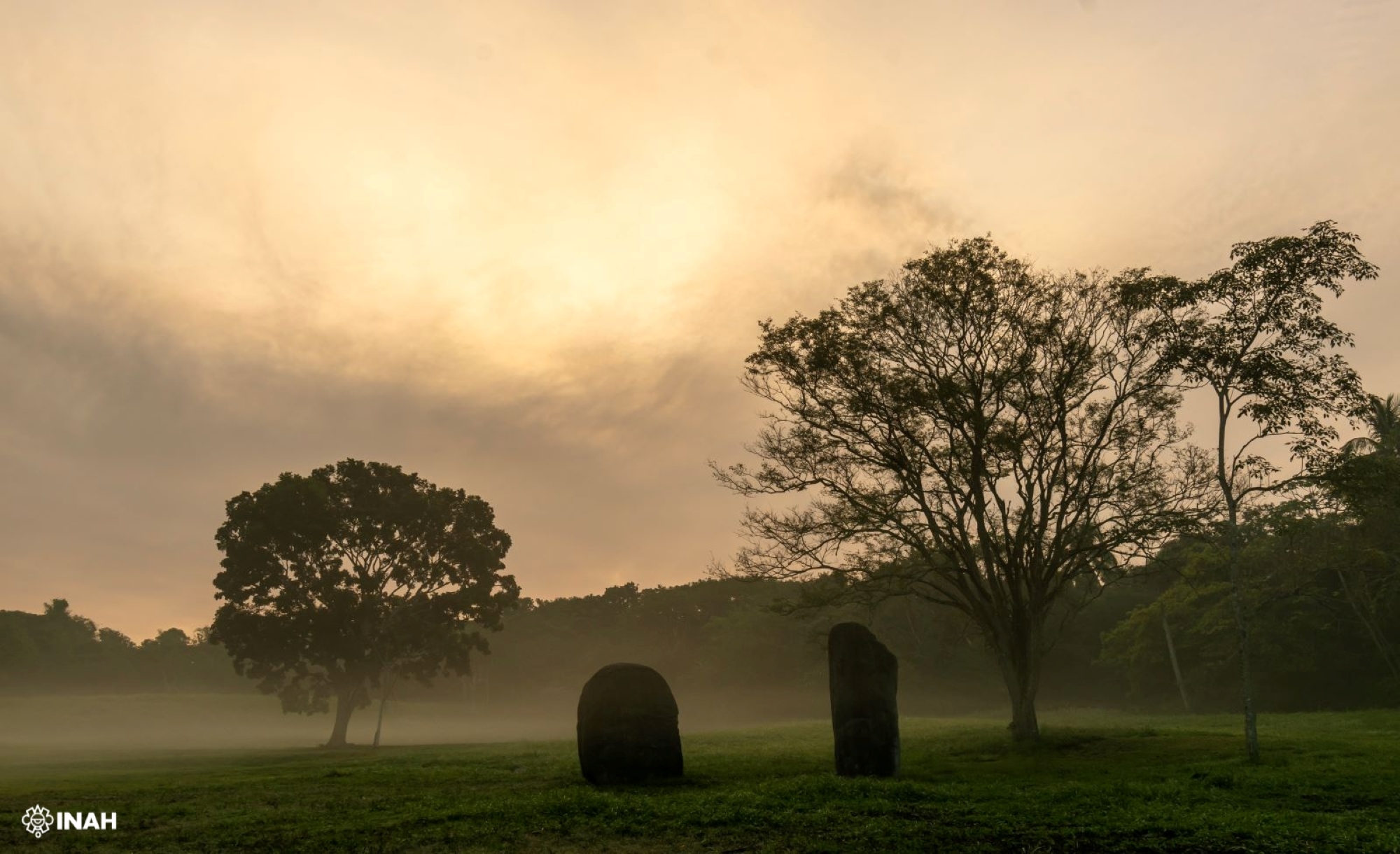
One of the first cities of ancient Mexico (1200-400 BC), set in a region of lush vegetation. The imprint of the mysterious Olmecas appears in the urban layout, the amazing stone sculptures—some of them weighing up to 35 tons—and the jade offerings found here.
La Venta is the oldest known Olmec city in Mesoamerica with a planned layout and a monumental architecture. It is comprised of platforms which are aligned on a north to south axis to form avenues and create open spaces. Settlers possibly first arrived in the region around the year 5,000 BC and 600 years later had already developed a remarkable culture. Large structures were built from compacted earth (stone quarries were far away), with the use of natural tar. These structures reached up to 100 feet in height on broad terraces, with enormous stone sculptures weighing up to 35 tonnes which were brought from the distant Gulf of Mexico area. These were carved with extraordinary skill and replicated the human form or combined it with animal forms to portray fantastical beings. Abundant offerings were also found underground, many of which were made from jade. There are no other comparable examples from this period in ancient Mexico.
A complex society lived here which was probably organized hierarchically, and which carried out intensive farming of corn and yucca (both of these were domesticated by the Olmecs relatively early and they yielded up to three harvests each year). They knew how to exploit the richness of the very humid alluvial soils and the abundant lakes and rivers—Tonalá River and its tributaries—as well as an ecosystem which was rich in edible plants and animals.
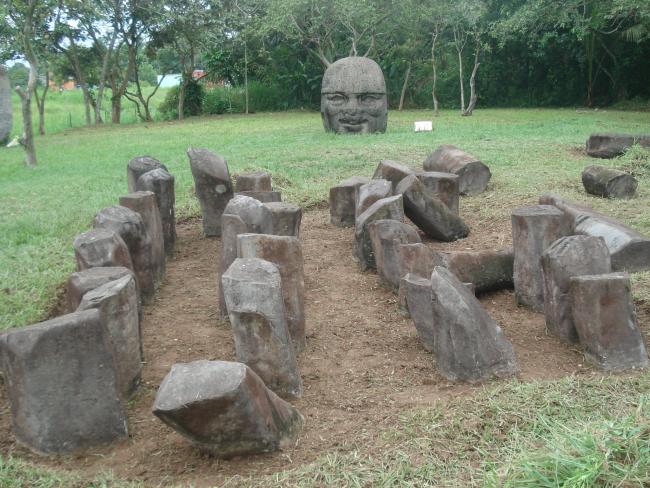
It is estimated that the site’s original area around 400 BC covered 500 acres. The city’s most valuable remains are grouped into four complexes. Complex A is the ceremonial enclosure, whose northern courtyard is marked out by a series of basalt columns (the mere fact of bringing them here was a great achievement); its Building A 2 contains a double tomb, made from this type of column, and the remains of two dignitaries, as well as rich offerings of jade, and another large offering of green stones (serpentine), perhaps in honor of Mother Earth. Complex B is a large ceremonial space on a spectacular platform, to the north of which the Stirling Acropolis is found (named in honor of the archeologist Matthew Stirling, who successfully explored the area between 1940 and 1943). Complex C contains the highest pyramidal base (100 feet), the Great Pyramid, in which six magnificent sculptures of fantastical beings were discovered, now in the Site Museum. Complex D consists of more than 20 platforms. Two sculptures which have been described as “altars”, also made with peerless skill, were found in one of them.
In 1955, upon excavation of the northern platform, the archeologist Eduardo Contreras found a substantial offering comprised of 16 figurines of male individuals, all carved from different green stones and framed by a row of axeheads. This discovery, known as Offering 4 of La Venta, commemorates a religious and political event which occurred approximately 1,300 years ago. It is currently exhibited in the National Museum of Anthropology.
A visit to the site is complimented by the Site Museum’s extensive exhibition and explanation of more than 200 original objects made from stone, ceramic or jade, as well as dioramas and miniatures made by expert artisans.


Complejo A
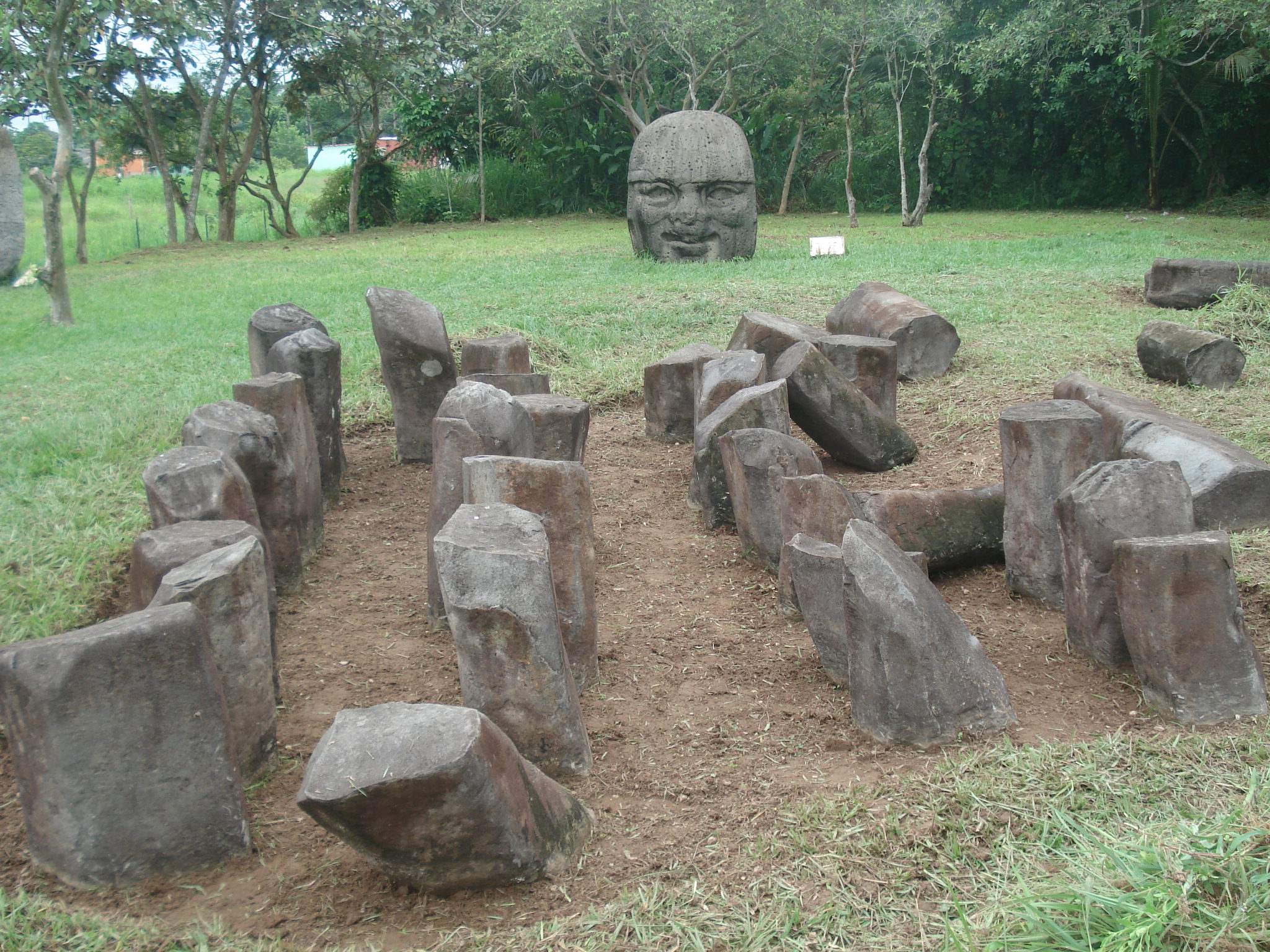
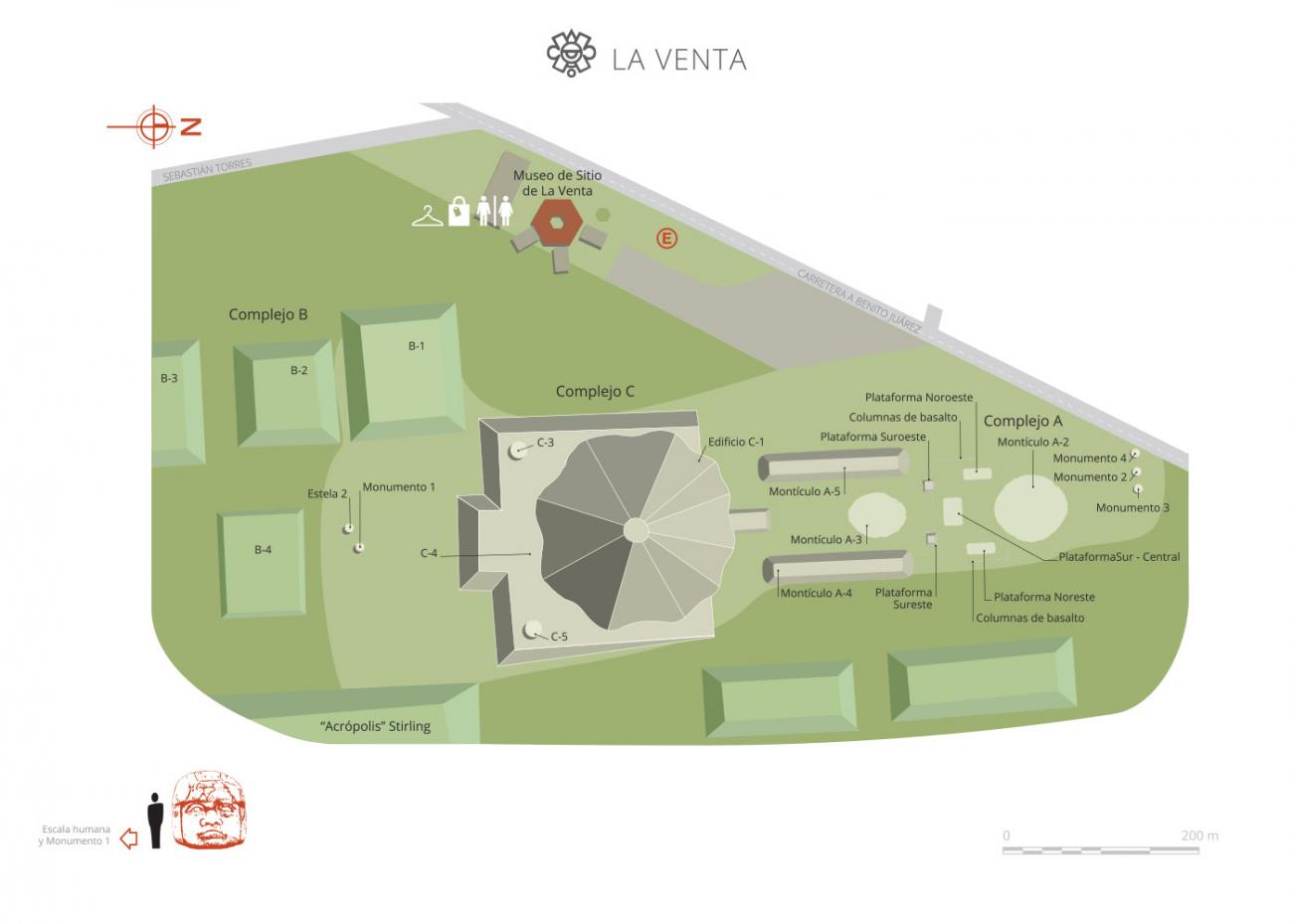
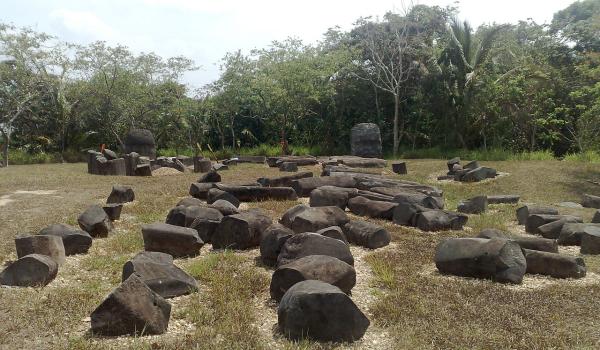
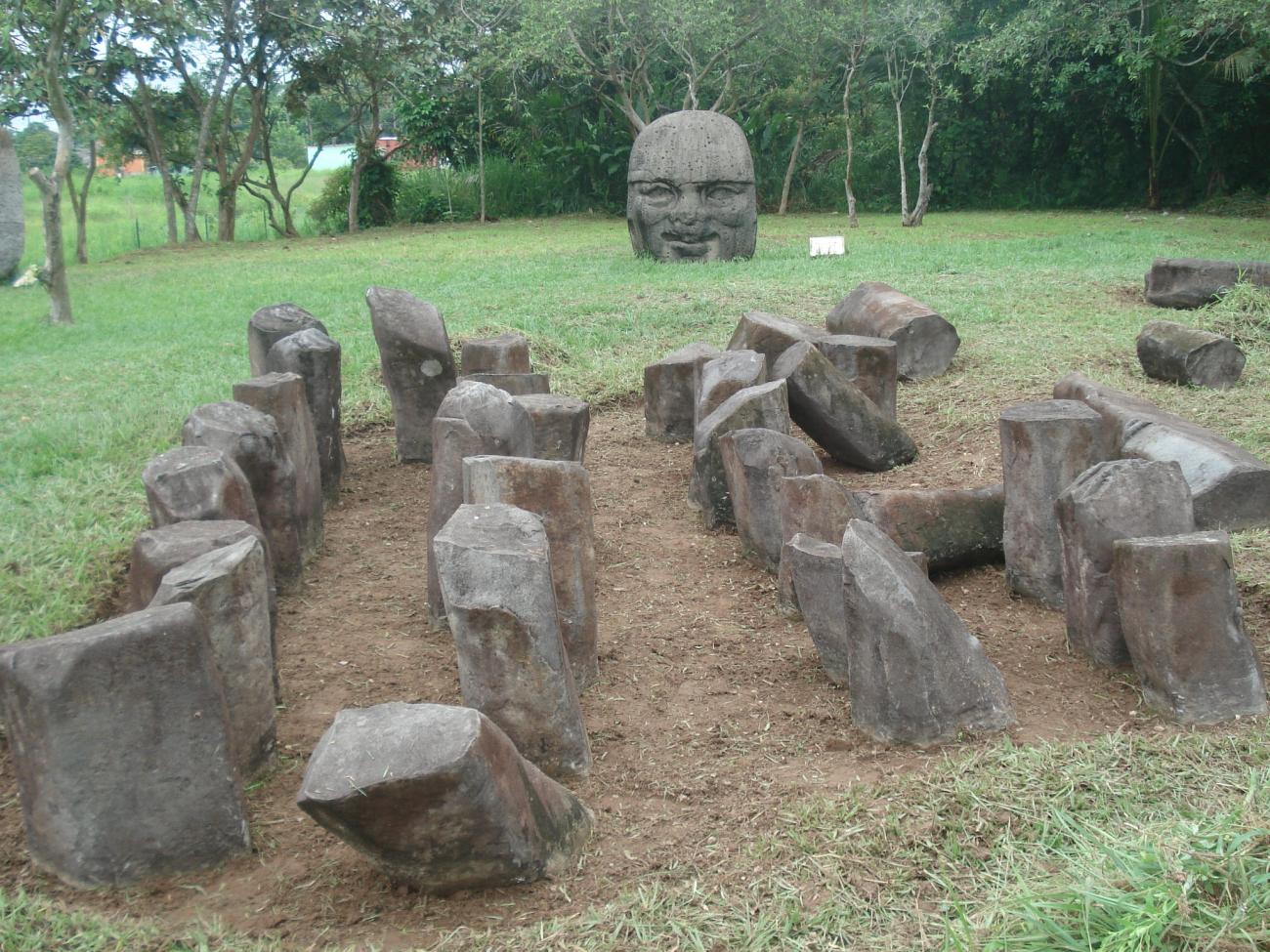
This is the ceremonial precinct of this ancient city. It was originally composed of nine structures arranged symmetrically around two courtyards. The north courtyard was delimited by a wall made of basalt columns.
Complejo A
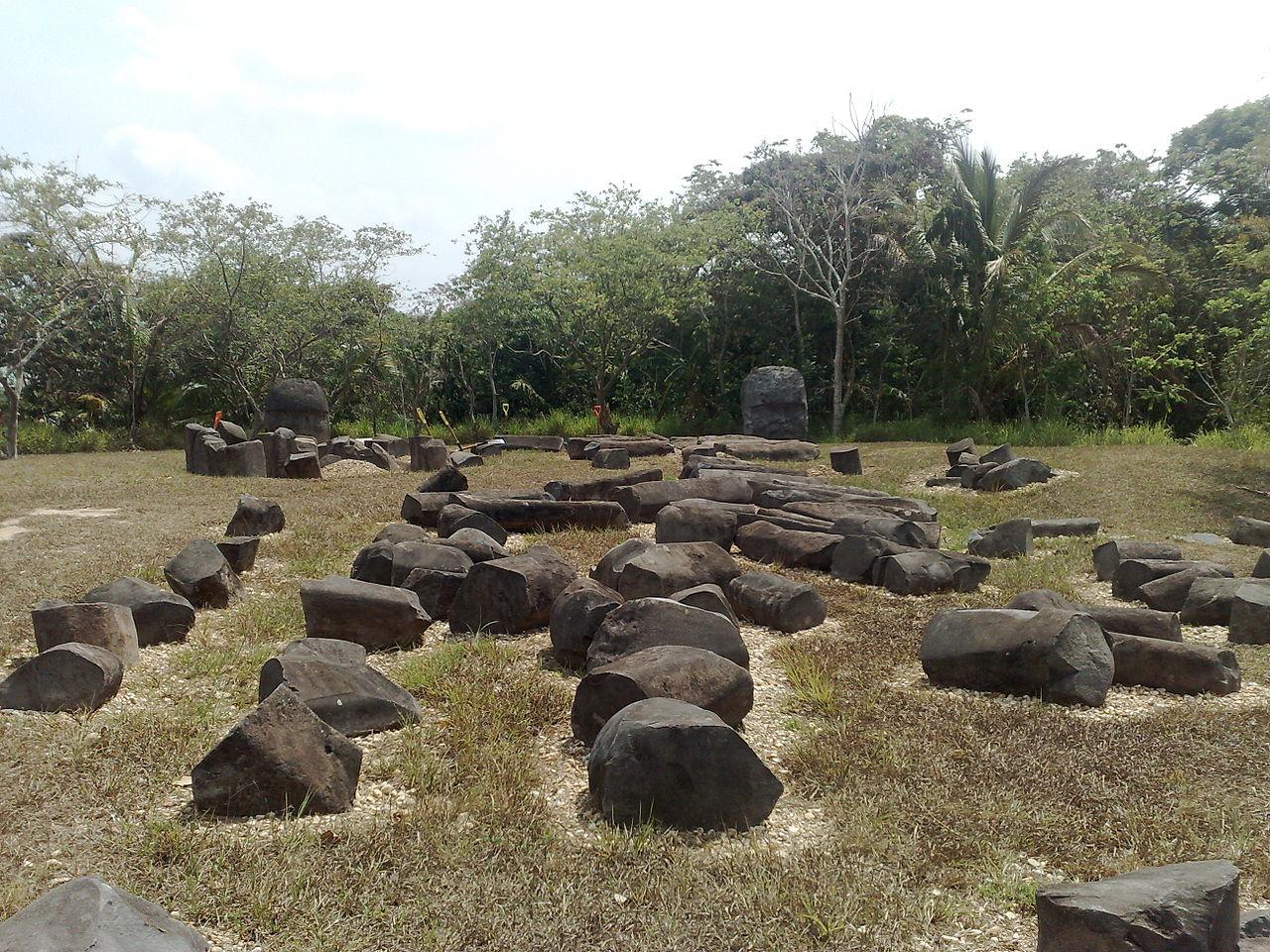
This is the ceremonial precinct of this ancient city. It was originally composed of nine structures arranged symmetrically around two courtyards. The north courtyard was delimited by a wall made of basalt columns. This sector of the ancient city was damaged between 1958 and 1984, which is why little can be seen today.
Within this architectural complex, around 50 offerings were found, composed of ceramic vessels and figurines; jade objects (ear flares, necklaces, votive chisels and figurines, among others), as well as other artifacts, such as hematite mirrors. Five massive offerings containing tons of serpentine stone were also found. In addition, a dozen stone sculptures carved in the Olmec style were found. The jade was imported from Guatemala, while the serpentine came from Oaxaca and the stone for the sculptures originated from the region of Los Tuxtlas, in Veracruz. This is proof that the inhabitants of La Venta participated in an extensive trade network.
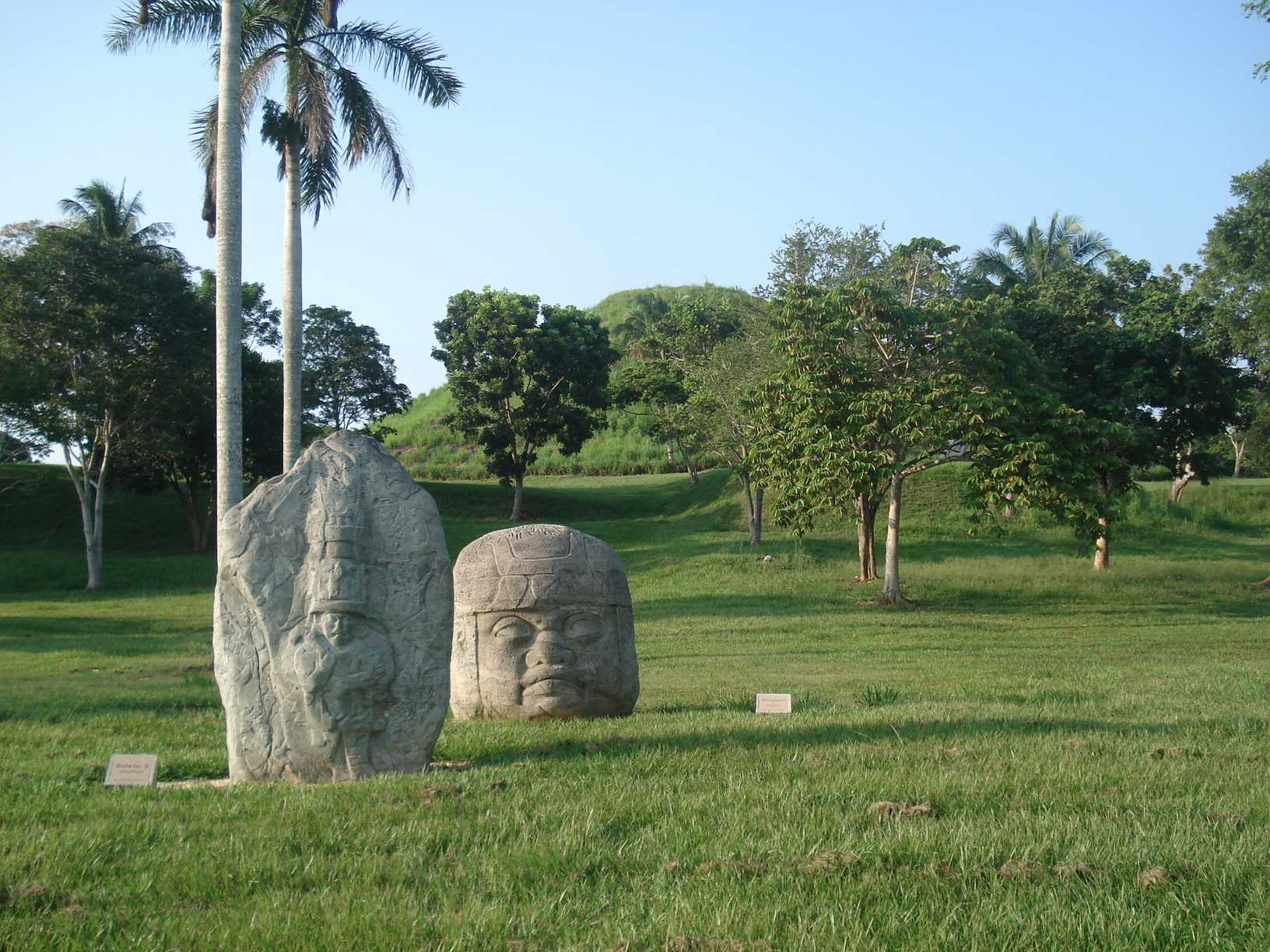
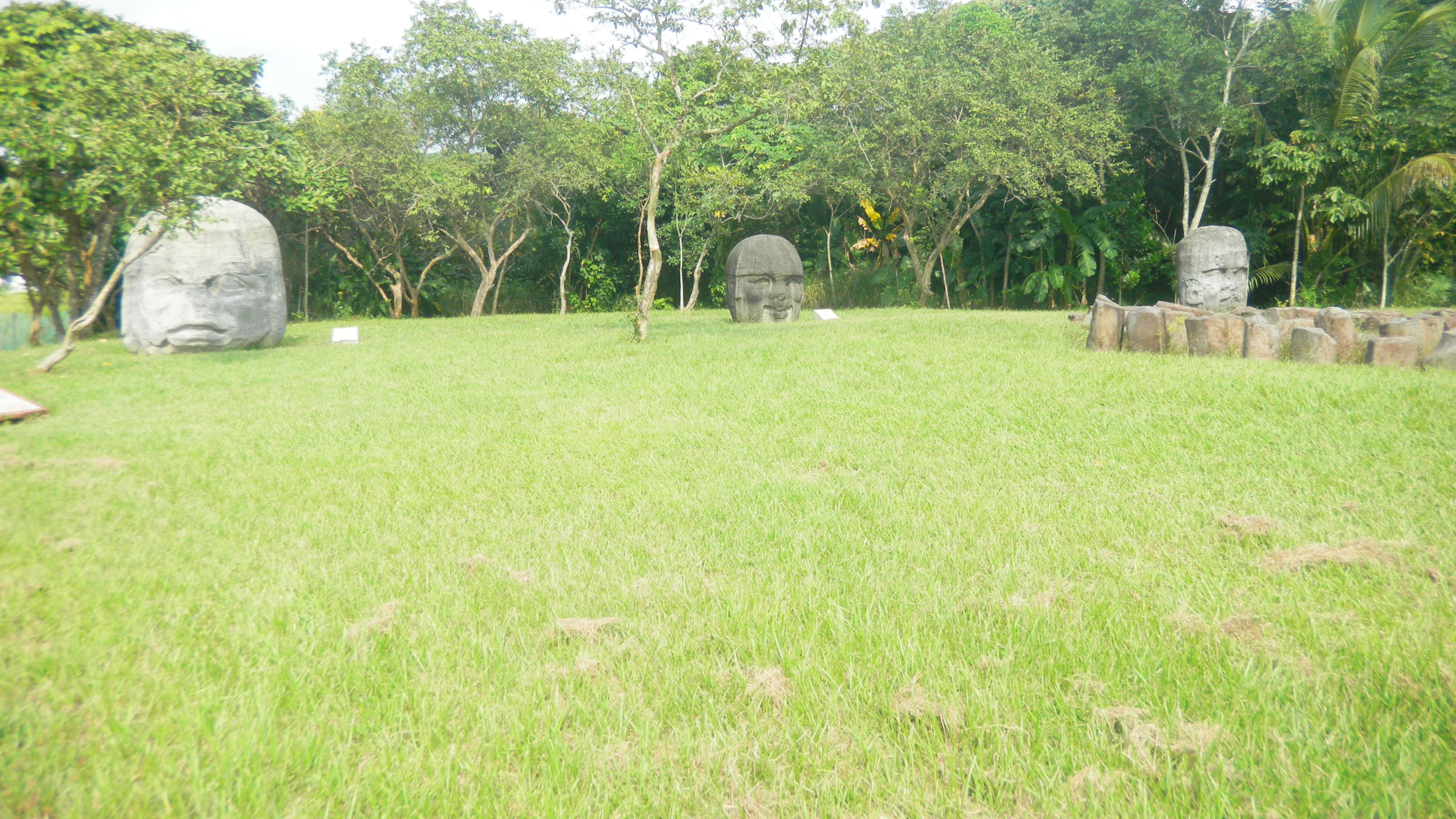
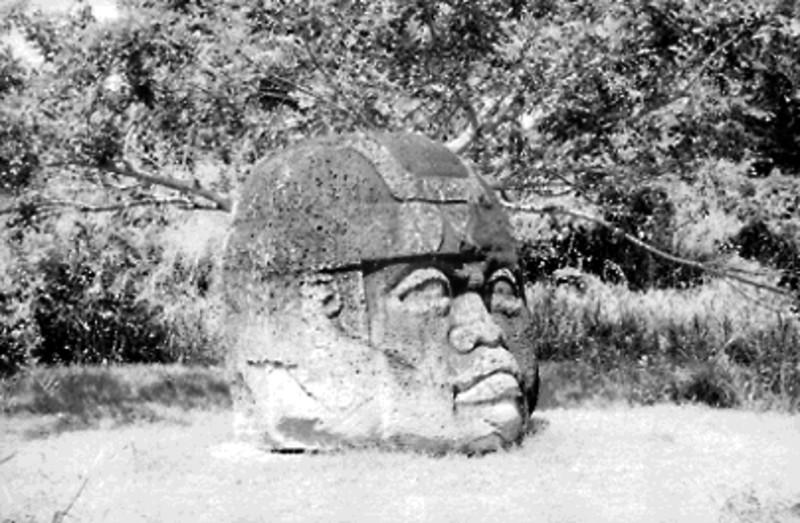
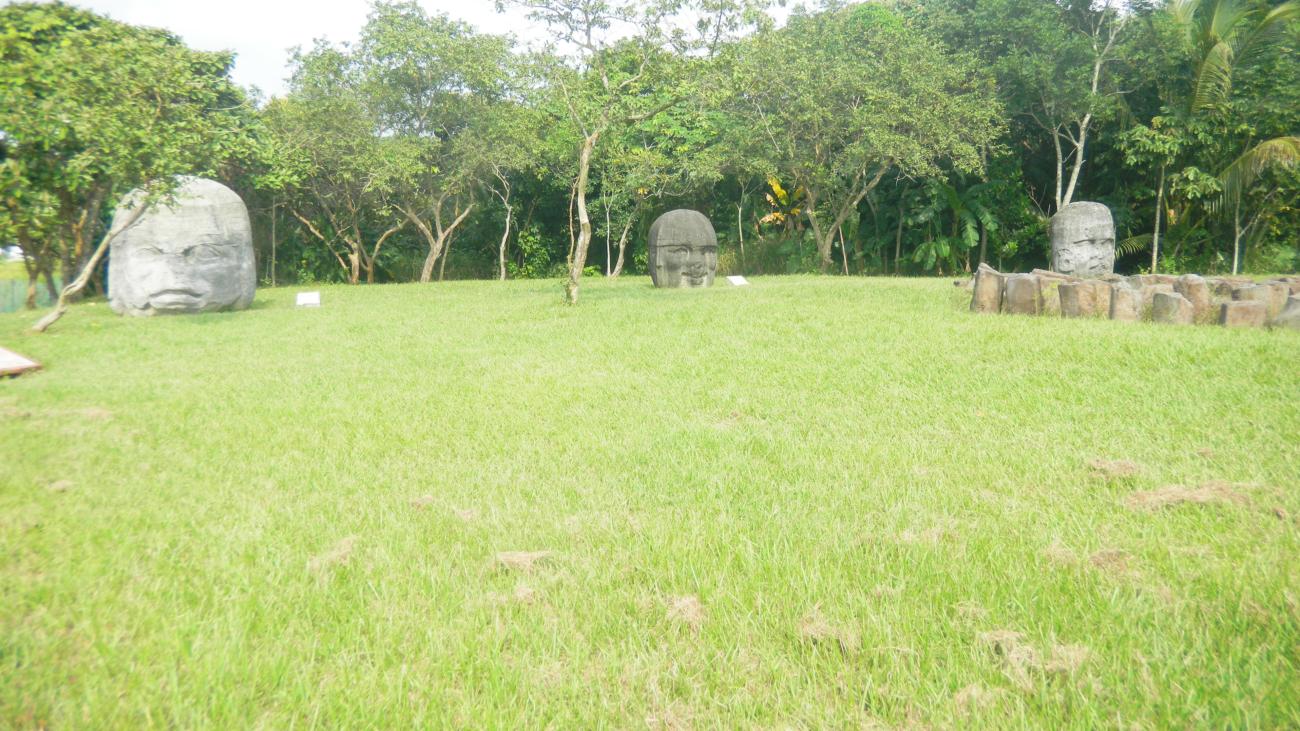
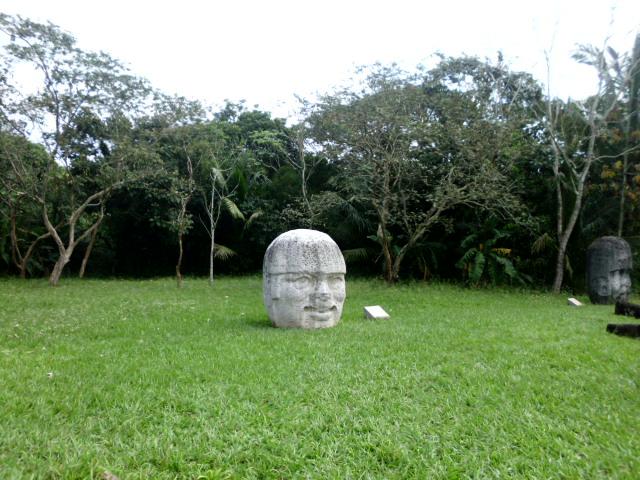
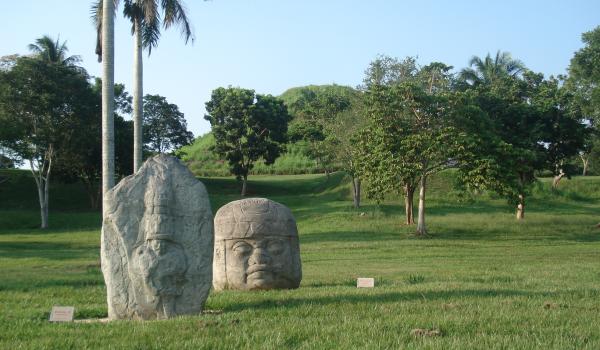
Colossal Heads: Monuments 2, 3 and 4 (colossal heads) were found to the north of Complex A oriented to the north. These works, made in volcanic rocks, such as basalt and andesite, are the representation of male human beings carrying insignia of power. Through the stone sculpture was the testimony of an unequal society in which its leaders elaborated their portraits in this way. The head on the left is monument 4; the one in the center, monument 2, and the one on the right, number 3.
Monument 2: The axes that project his face evoke a motif of recurring iconography between the Early Preclassic and early Middle Preclassic periods (900-400 B.C.), where a change in aesthetic appreciation is denoted and the norm in the perspective of sculpture in bulk is modified.
Complejo B
This architectural group is located south of the main pyramidal base and consists of three large platforms aligned on a north-south axis (B-1, B-2 and B-3). A fourth platform to the east (B-4), which is smaller, completes the group.
Complejo B
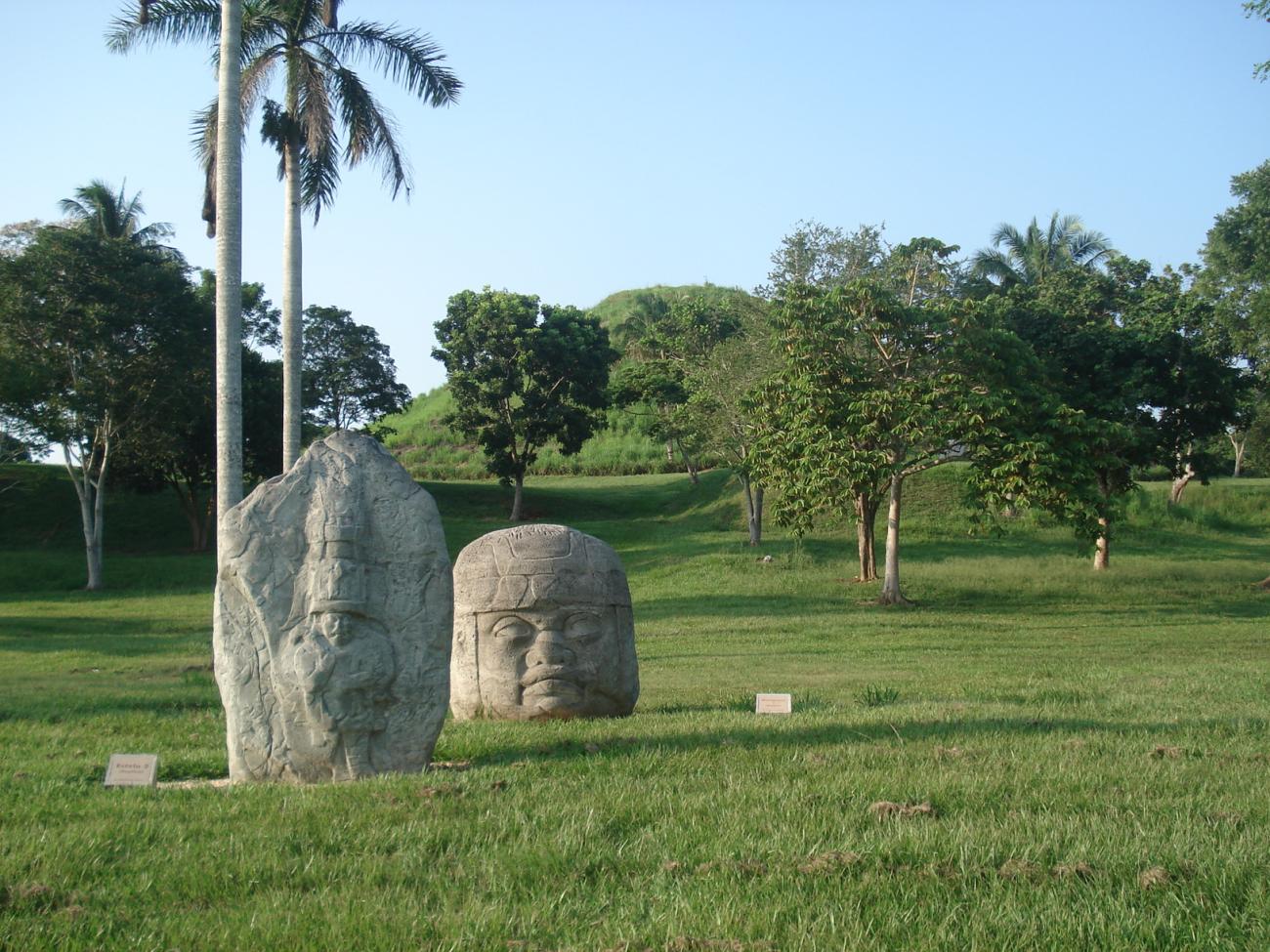
This architectural group is located south of the main pyramidal base and consists of three large platforms aligned on a north-south axis (B-1, B-2 and B-3). A fourth platform to the east (B-4), which is smaller, completes the group. On it were found large fragments of unworked stone and sculptures in the process of carving, indicating that perhaps the stone was worked there.
None of these buildings has been subjected to systematic excavations. Consequently, their location alone suggests that they had a civic-ceremonial function. As in the rest of the site, they were built with rammed earth.
Complejo C
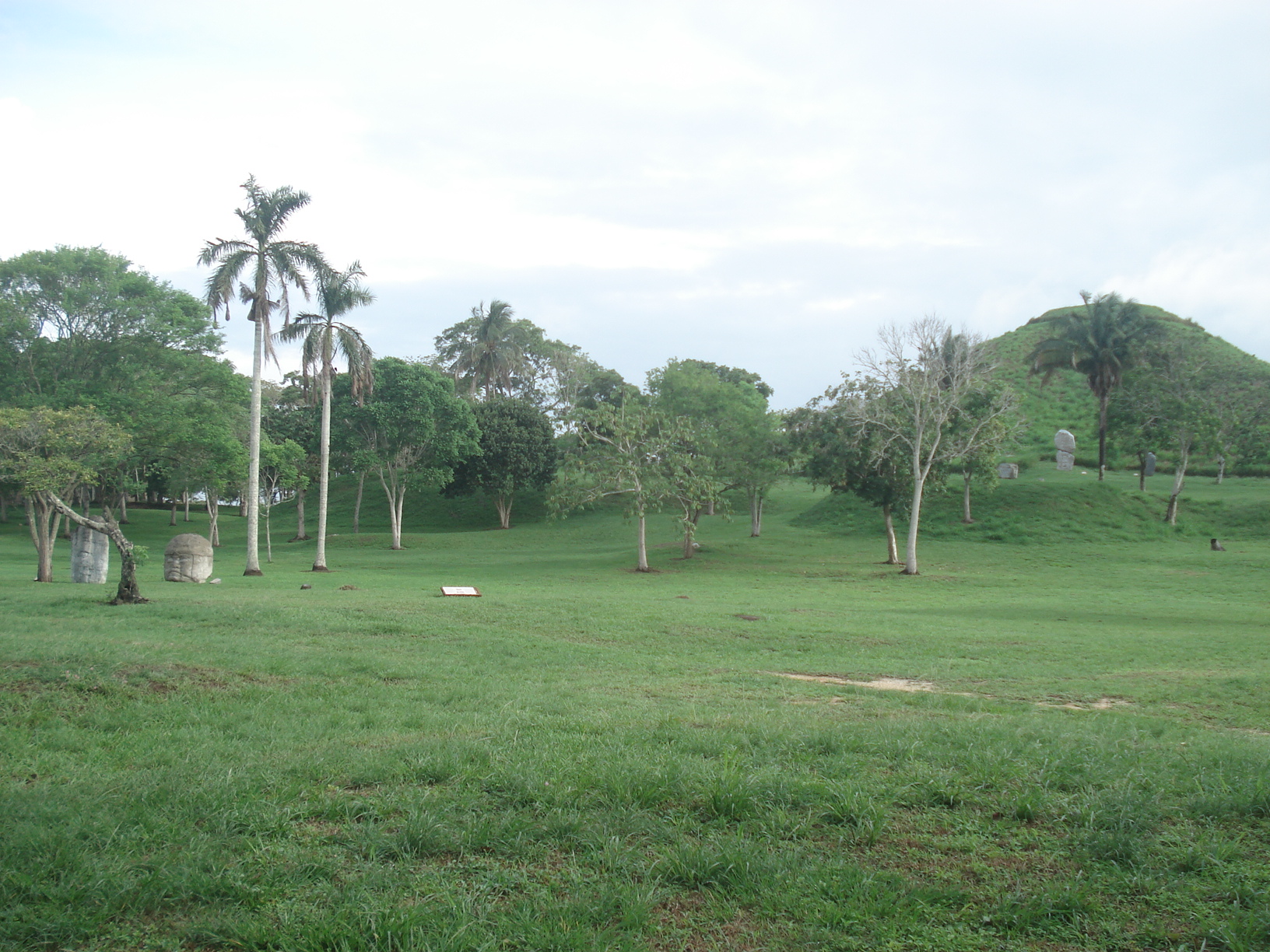
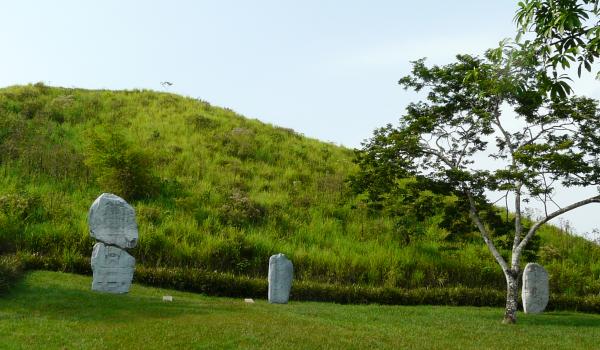
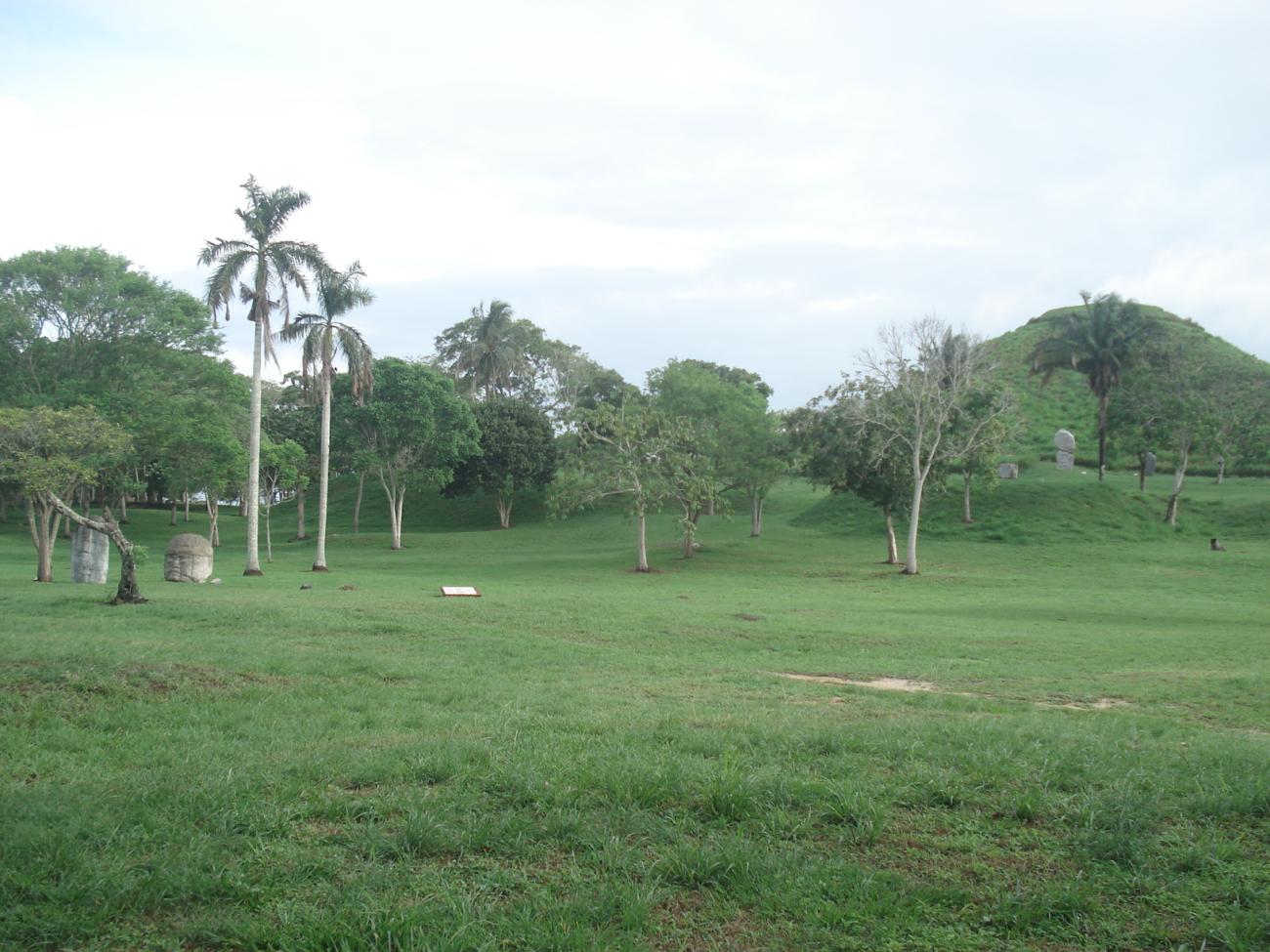
Located to the south of Complex A, it consists of a platform on which the main pyramidal foundation (building C-1) was built. It is 30 m high and offers an unobstructed 360-degree view.
Complejo C
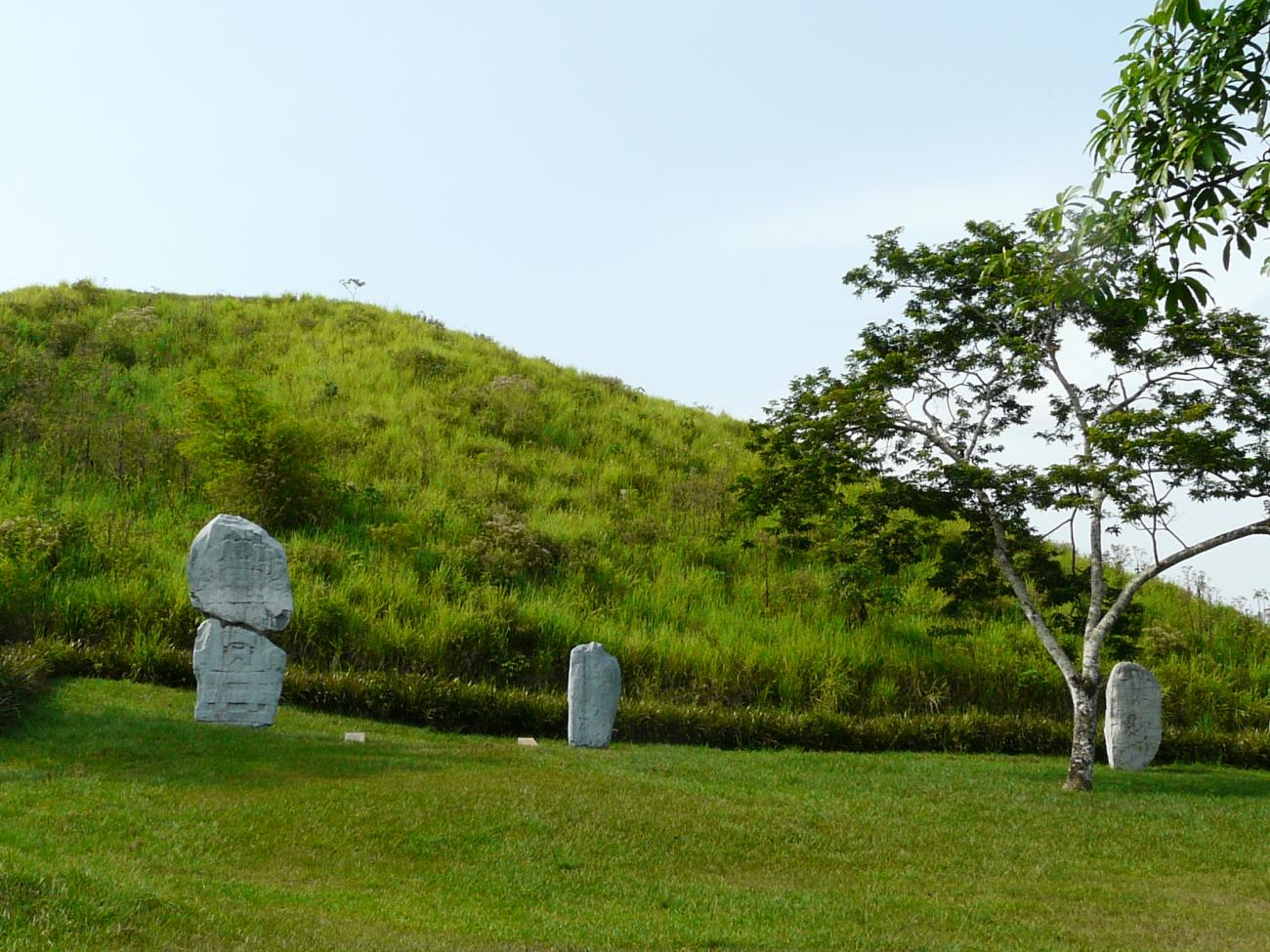
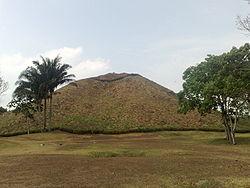
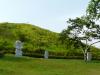
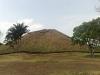
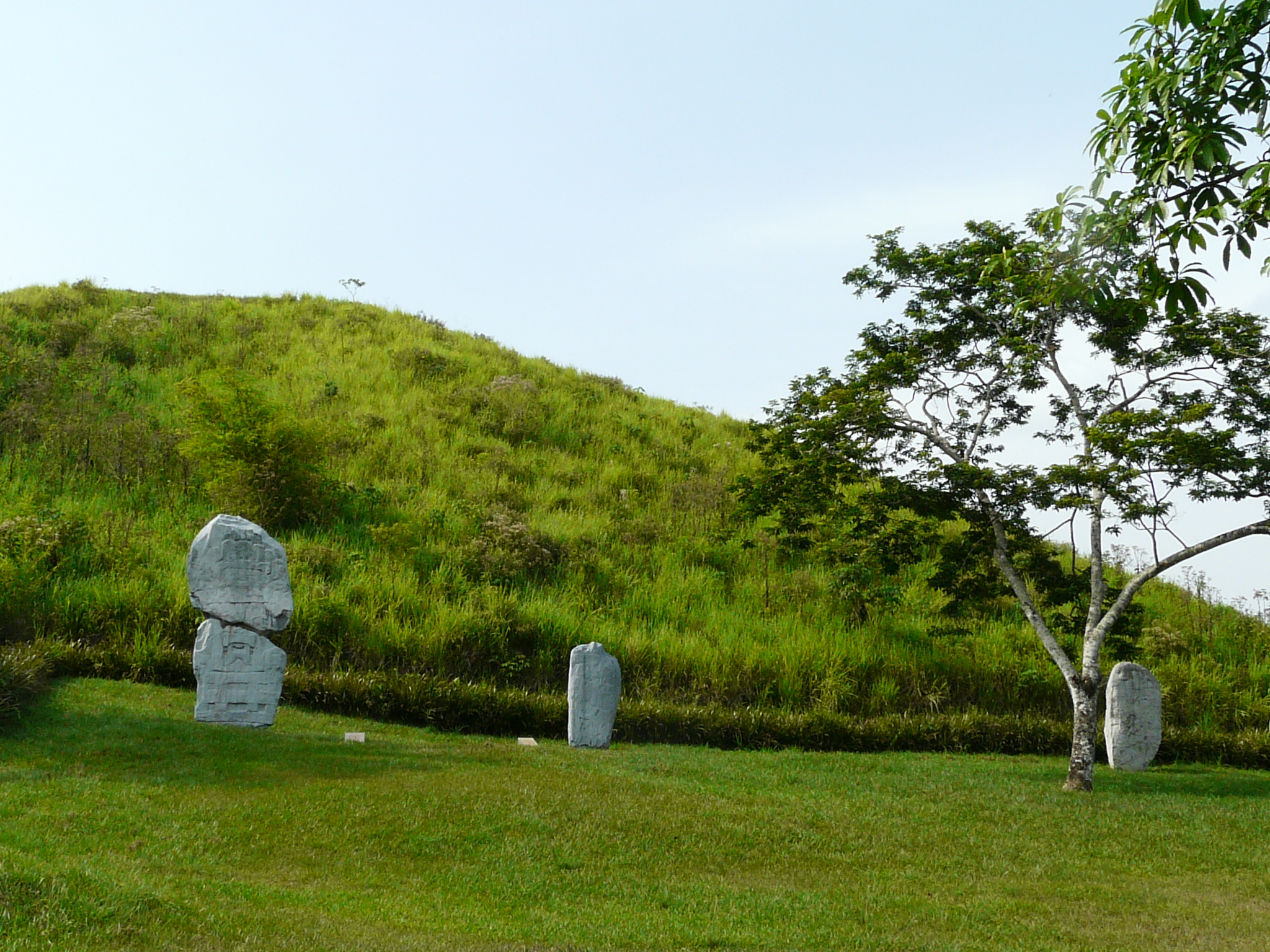
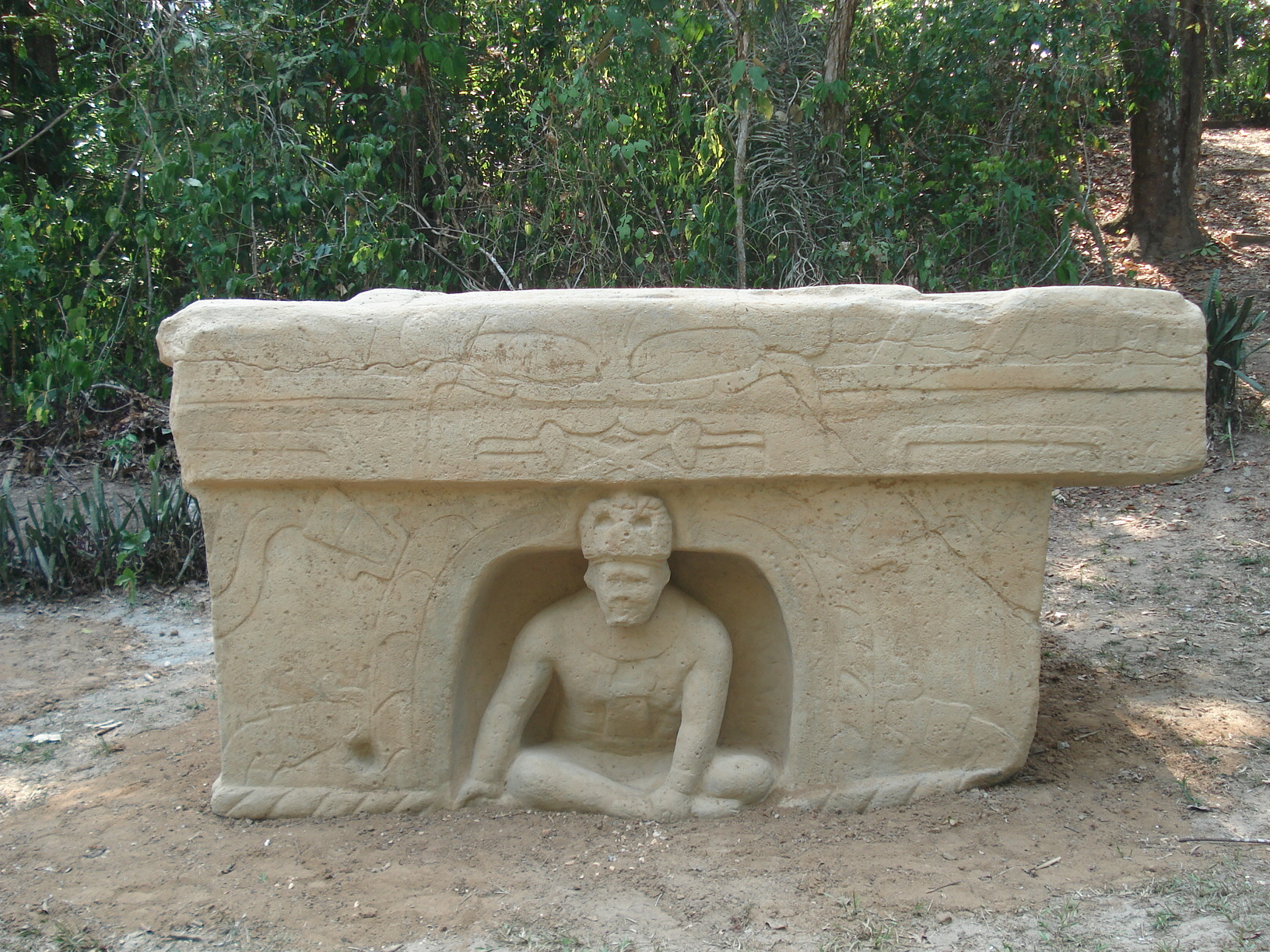
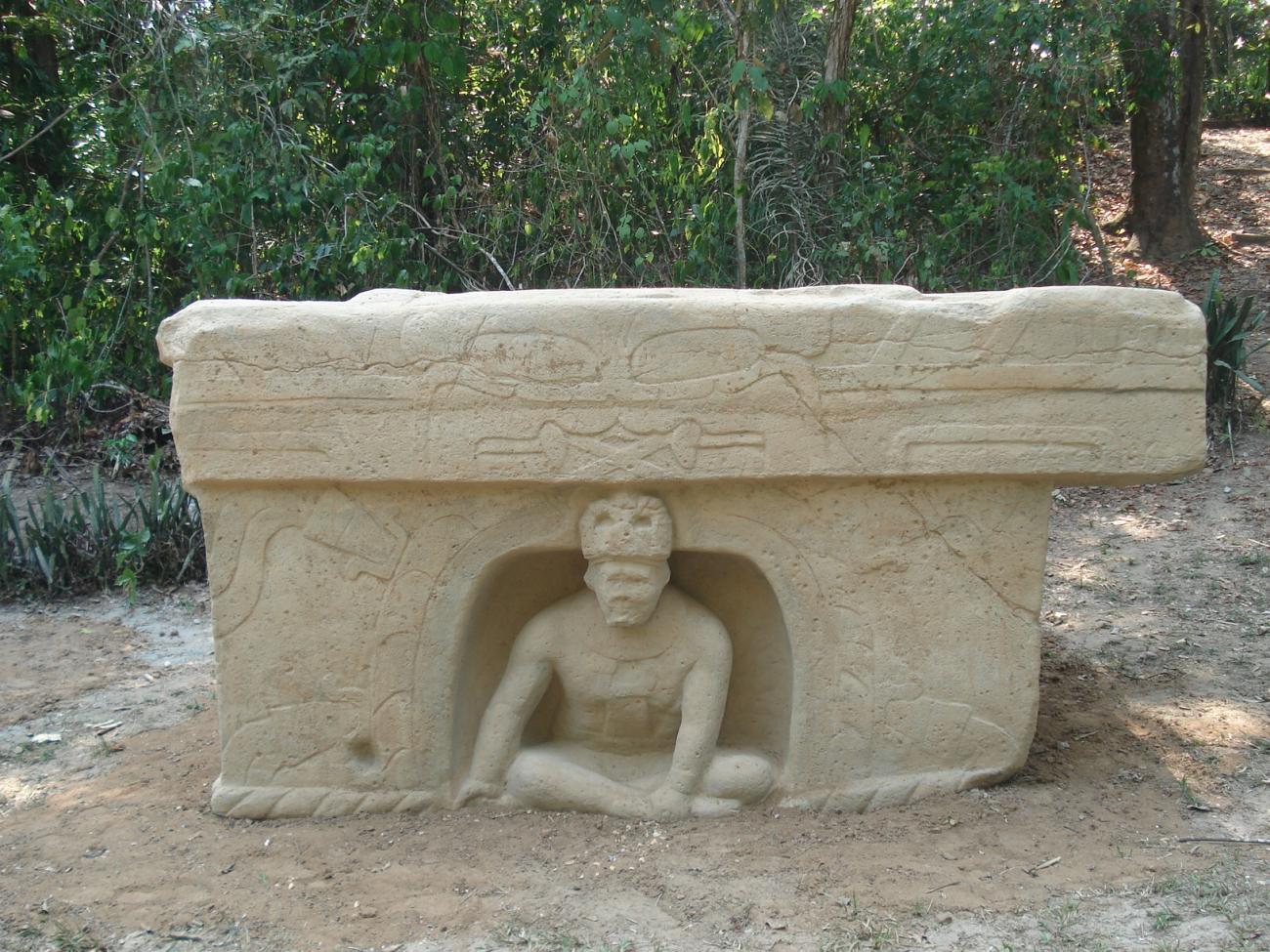
Located to the south of Complex A, it consists of a platform on which the main pyramidal foundation (building C-1) was built. It is 30 m high and offers an unobstructed 360-degree view. Its last construction stage dates from approximately 400 B.C.; it is considered the oldest for its type and size. The complex was built with rammed earth (clay and sand), held in place by limestone slabs, as a kind of internal buttresses. On its south side six tombstones carved in bas-reliefs were found, arranged symmetrically on the sides of a central staircase. In front, a pair of altars were located, stone sculptures with a central niche from which an individual emerges in a seated position.
Visitors can see the replicas of these works in their original architectural context and get a glimpse of the harmonious proportion between architecture and sculpture.
Building C-1: This structure, mounted on a platform on which the main pyramidal base was built, measures more than 30 m and is the tallest in the archaeological zone. Six sculptures were found symmetrically arranged on the sides of a possible central stairway.
Complejo D
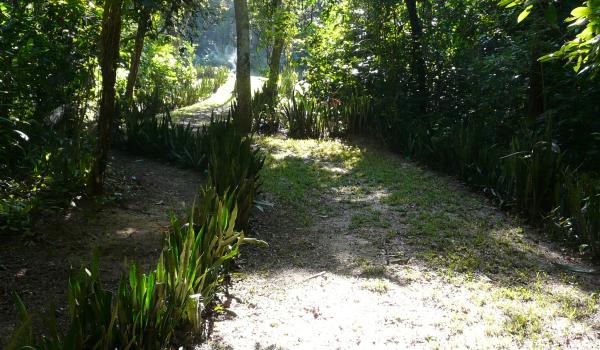
This architectural complex of 20 rammed earth buildings is organized in three north-south axes, creating a sort of avenues between them. Three monumental sculptures (52, 53 and 54) were found on top of building D-7, at the southern end.
Complejo D
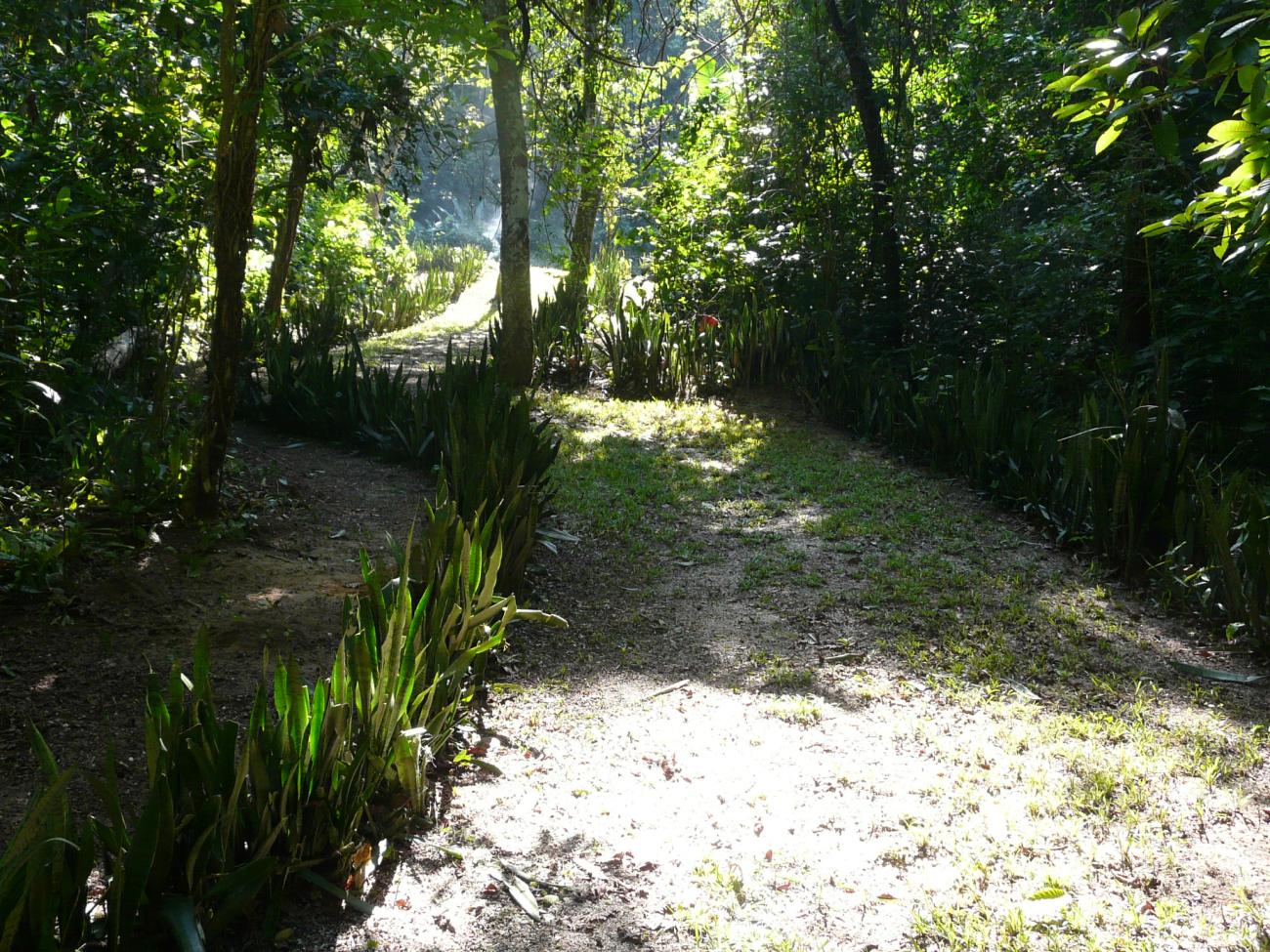
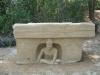
This architectural complex of 20 rammed earth buildings is organized in three north-south axes, creating a sort of avenues between them. Three monumental sculptures (52, 53 and 54) were found on top of building D-7, at the southern end. Like the colossal heads to the north, they probably indicate one of the entrances to the ancient Olmec city. These monoliths, weighing between 14 and 35 tons, are exhibited in the site museum.
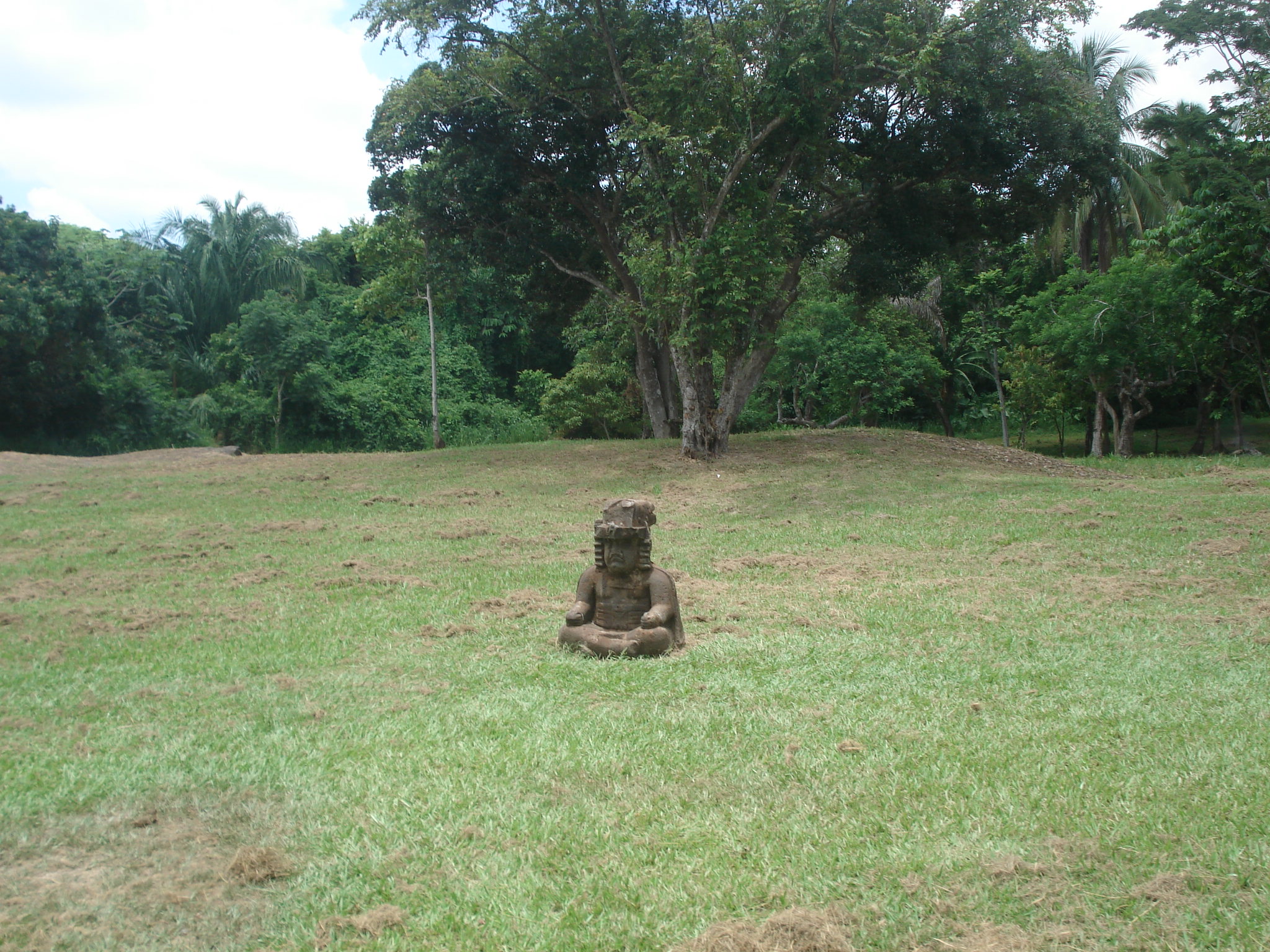
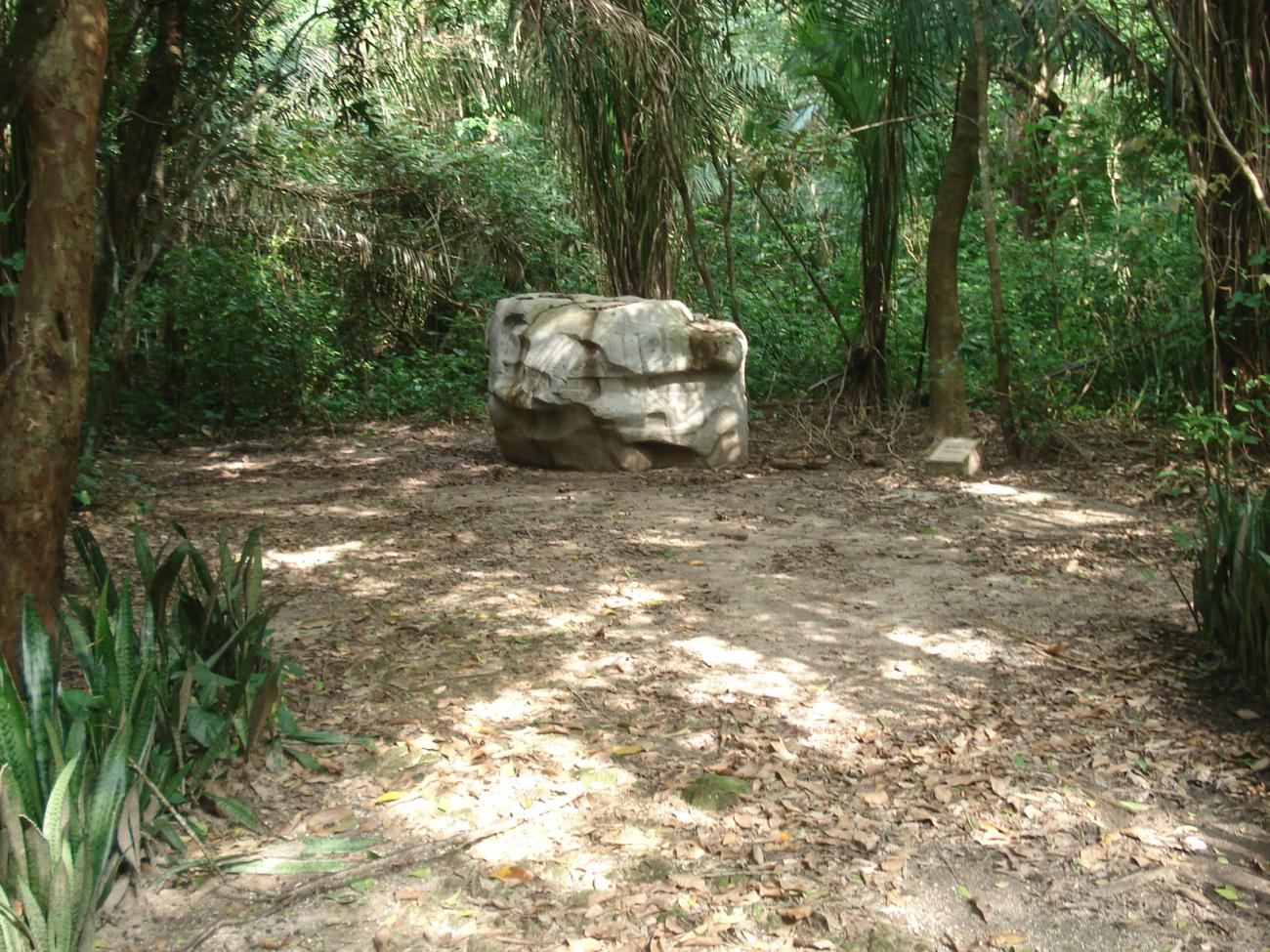
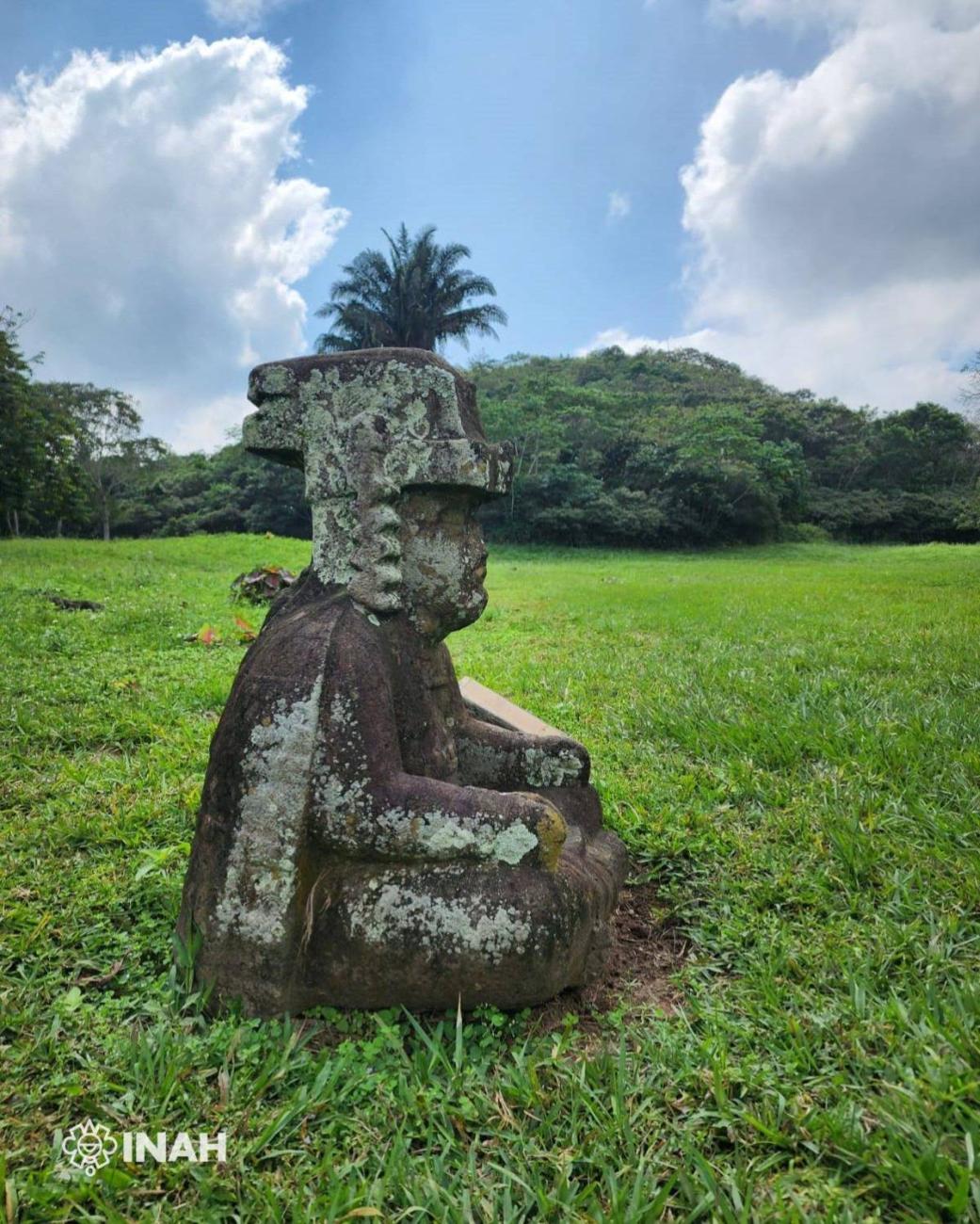
Altars 4 and 5, the most beautiful examples of this type of sculpture, were located on the sides of a platform more than 100 m long (building D-8). They are similar to the altars of complex C and show a seated individual emerging from a niche; they hold an infant and a rope, respectively. The reproductions of these extraordinary examples of Olmec sculpture are located where the originals were discovered.
Altar 1: Regarding sculpture, in the first phase of La Venta, composite zoomorphic beings were made, such as the one that can be seen on this altar, where in addition to the hand-claw-wing motifs that are common in Early Preclassic ceramics (1500-900 BC), we can find a being with feline and saurian characteristics.
Altar 4: In this altar we see a ribbon held by the central character, possibly with one of his ancestors.
Acrópolis de Stirling
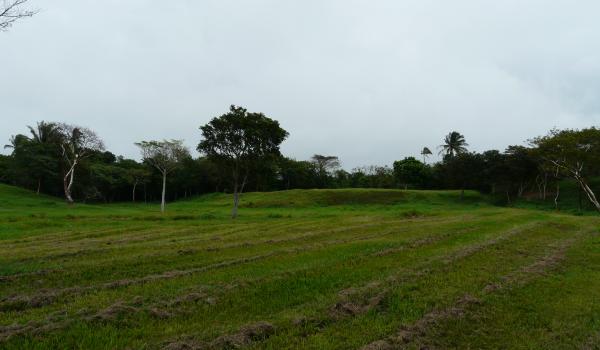
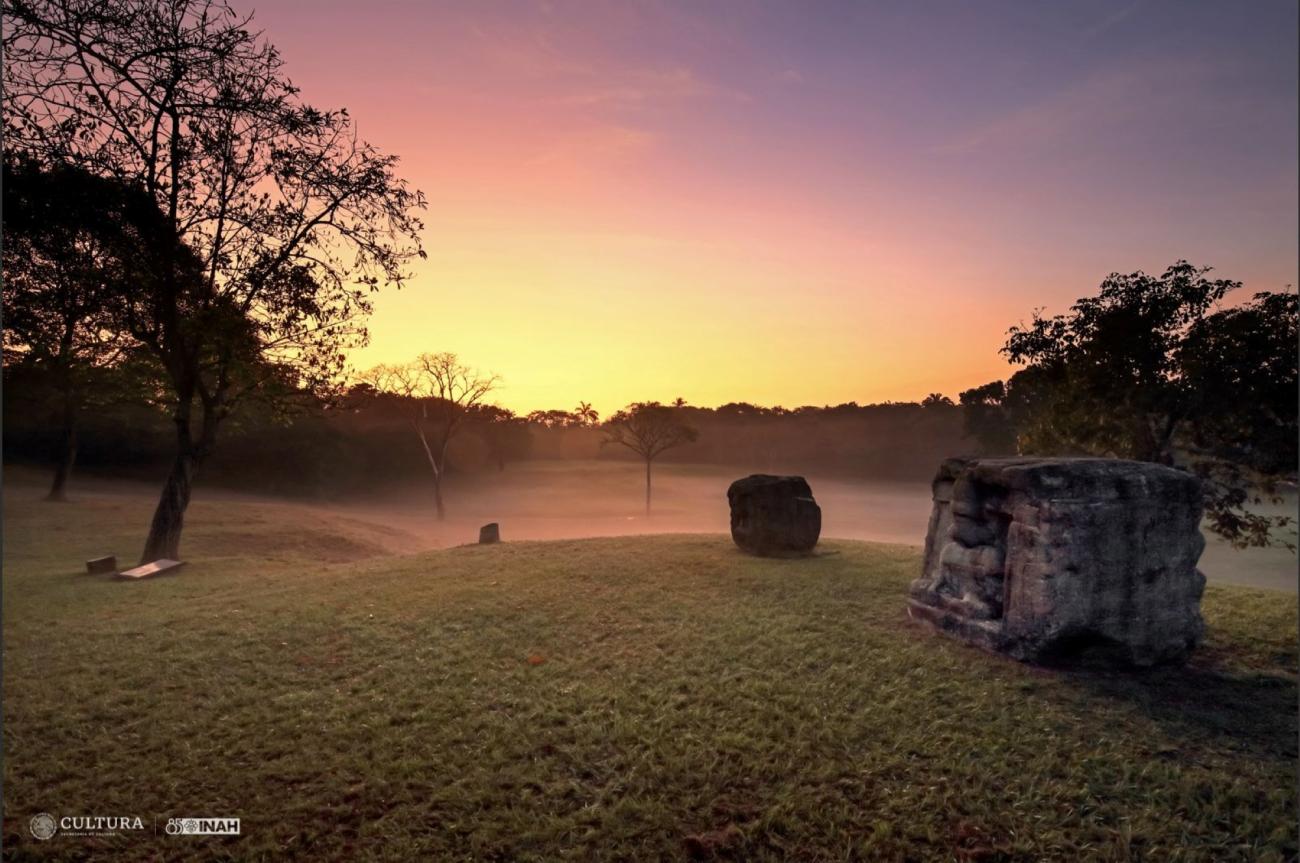
It delimits the Great Plaza to the east. It consists of an enormous platform that presents a front of more than 300 m long, on which at least four small mounds have been located. It is, without a doubt, the structure of greater extension in the old Olmec city.
Acrópolis de Stirling
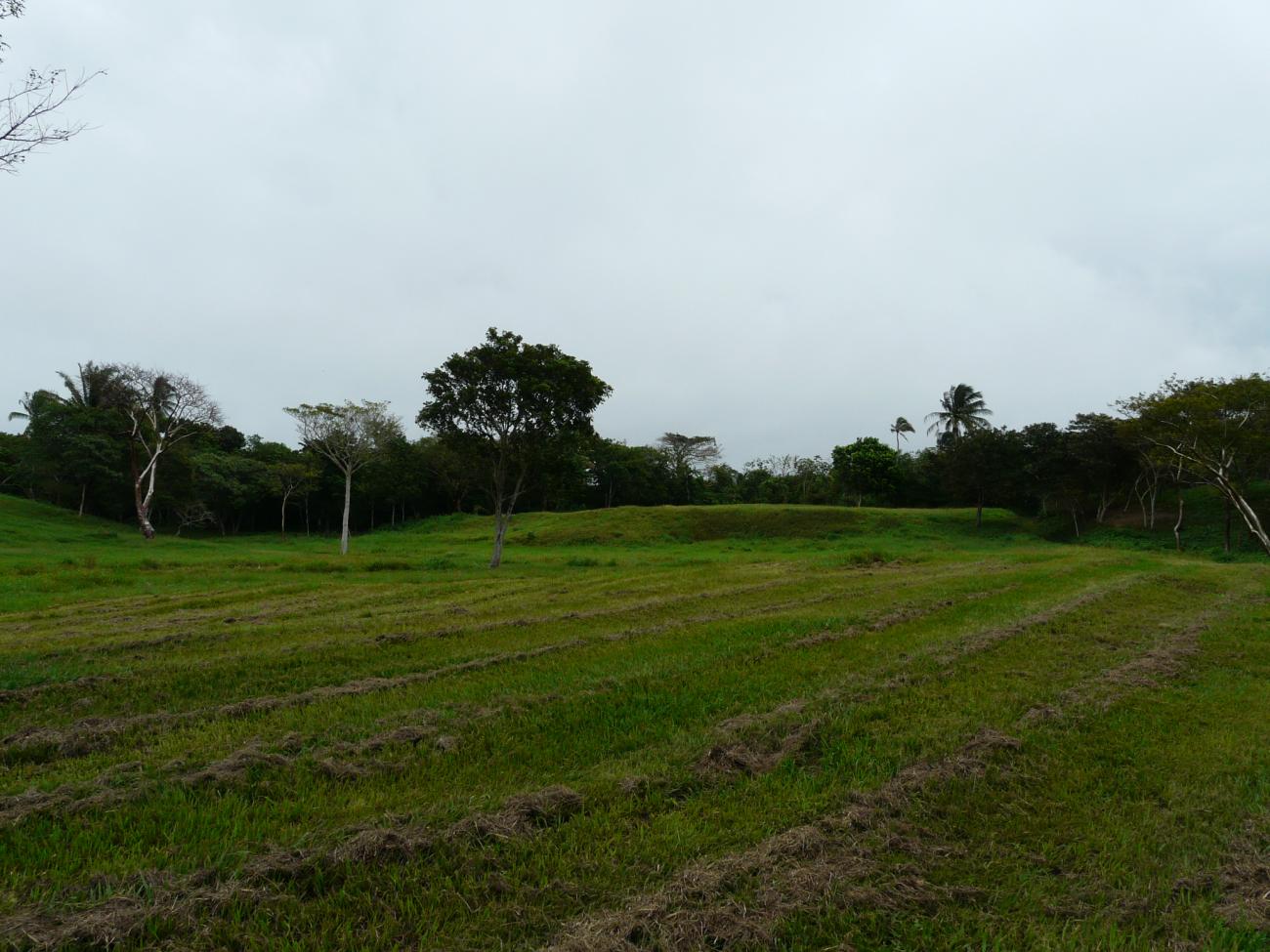
It delimits the Great Plaza to the east. It consists of an enormous platform that presents a front of more than 300 m long, on which at least four small mounds have been located. It is, without a doubt, the structure of greater extension in the old Olmec city. In the southeast sector, a series of U-shaped carved stones with lids were found, creating a complex water distribution system. The presence of basalt columns scattered on this platform points to elite buildings, while a group of sculpture fragments could indicate possible carving workshops.


Contact
- Dirección del Centro INAHCarlos Arturo Giordano Sánchez Veríncarlos_giordano@inah.gob.mx+52 (933) 352 1022